Finlay McSporran
Published: 14:42 12 August 2026
Formula 4 racing will return to Germany next year for the first time since 2022.
But how will it work? What will it look like? And will it avoid the same problems that F4 faced last time in Germany?
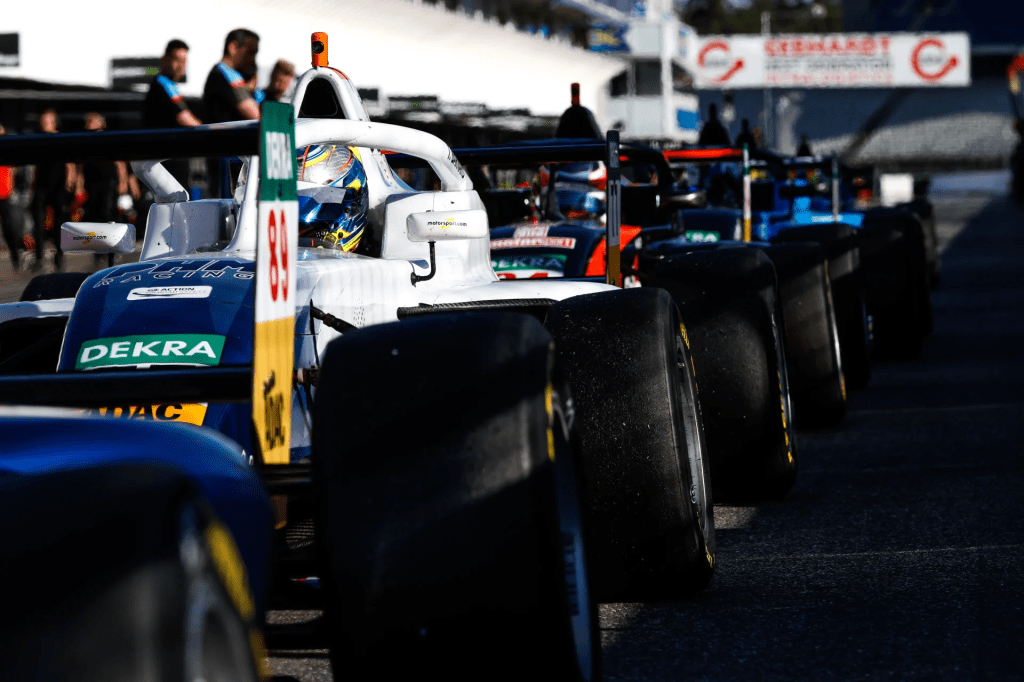
A Short View Back to The Past
Four years ago, Formula One’s championship leader, Kimi Antionelli, was racing at Formula 4 level in Germany.
The 15 year old would eventually go on to win the title, taking nine wins from 18 races (three of which he missed!).
Little did we know however, that it would be the last time we saw F4 cars racing in Germany.
The series organiser, ADAC (Germany’s Automobile Club), announced that the championship would not continue for 2023, with high costs and a low number of drivers being some of the reasons for the series’ cancellation.
However, after a four year absence, it was announced in July of this year that F4 racing will be returning to Germany in 2027.
Here is everything you need to know about the FIA Formula 4 German Championship, coming next year…
The Car
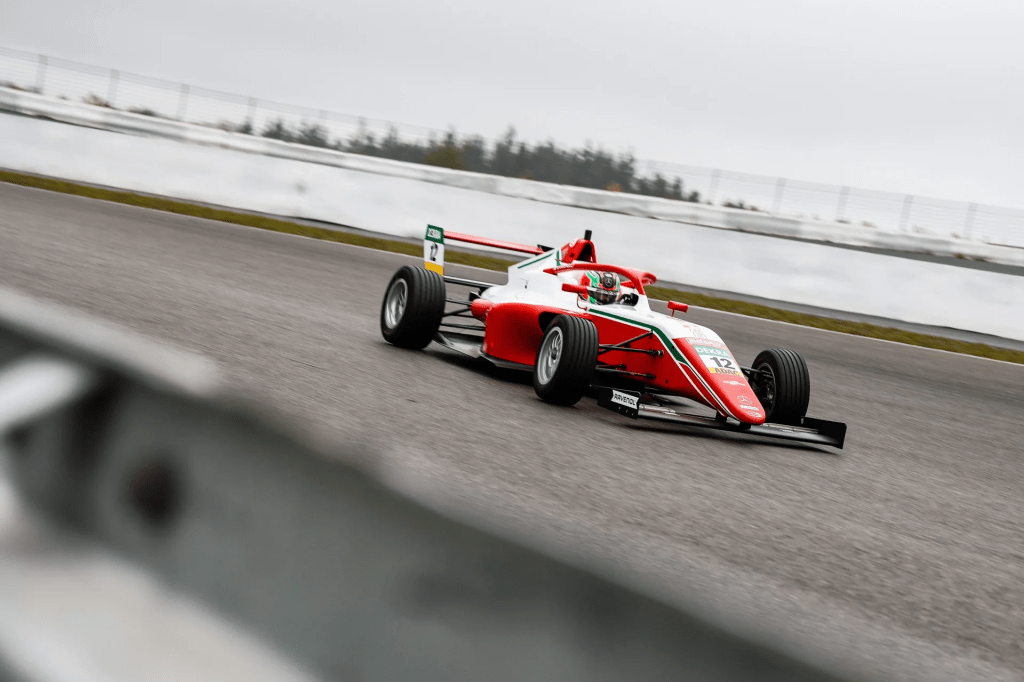
German F4 will use the second generation Tatuus T-42 chassis.
It’s the most commonly used F4 car, with Italian manufacturers Tatuus supplying lots of other series such as British F4, Italian F4, and Spanish F4 just to name a few.
The cars will be powered by a 1.4-litre turbocharged engine, supplied by Italian company Autotecnica Motori, who also provide the gearboxes.
Tyres will come from Pirelli, which is also in line with most other European single-seater championships.
The Format
Seven rounds will be on the 2027 German F4 calendar.
Six of which will be at German tracks with one abroad trip planned for round two.
- HockenheimRing
- International race TBC*
- LausitzRing
- Norisring
- Oschersleben
- Nurburgring
- Sachsenring
*Spa-Francorchamps, Redbull Ring, and Zandvoort are the current shortlist for round two.
Each weekend will feature three races (30 mins + 1 lap), two qualifying sessions (15 mins), two free practice sessions (30mins) and an optional test session.
Thursday – Test Sessions
Friday – FP1 + FP2
Saturday – Qualifying 1 +2, Race 1
Sunday – Race 2 +3
Costs and Prize Money
As with most junior single seater championships, the cost for a full season will likely be quite high, well into six figures.
To help control this, F4 Germany mandates a fixed testing schedule, with up to 20 days available throughout the year, including two pre season tests. This should also, hopefully, prevent drivers paying to win by carrying out extra test sessions.
Furthermore, the championships ‘Race for Gold’ programme awards the most successful drivers by handing out prize money throughout the season.
A total of €500,000 will be on offer, with the biggest award going to the drivers champion.
Money will also be awarded to the championship runner up, the driver third in the standings, as well as other achievements such as top rookie and top female driver.
Here to Stay?
This all sounds good, but we still need to address the elephant in the room.
If the championship disappeared just a few years ago, because of high costs and less drivers, then surely the same thing could happen again?
Well yes, it could, but it’s unlikely.
Formula 4 championships worldwide are seeing a massive growth in interest, with most series needing to expand their capacity to meet the demand.
This years British F4 season has a record 30 car grid, French F4 saw a record 32 car grid, while CEZ F4 saw 42 drivers compete in the first round!
There’s a clear interest in racing at this level, especially with the increased exposure many of these series have.
British F4, for example, races alongside the British Touring car Championship (BTCC), and even raced alongside Formula 1 at Silverstone last year!
With five of the seven rounds acting as support races for DTM, at some of Europe’s most exciting tracks, a seat in German F4 will be very appealing for any up and coming young drivers.
Tags:


Leave a Reply